

MatSimKit-DM
Material Data Management Software
"Transform scattered calculation data into enterprise material knowledge"
Centralize, compare, validate and visualize material calculation results and experimental data, transforming scattered data into accumulating enterprise material knowledge.
Product Overview
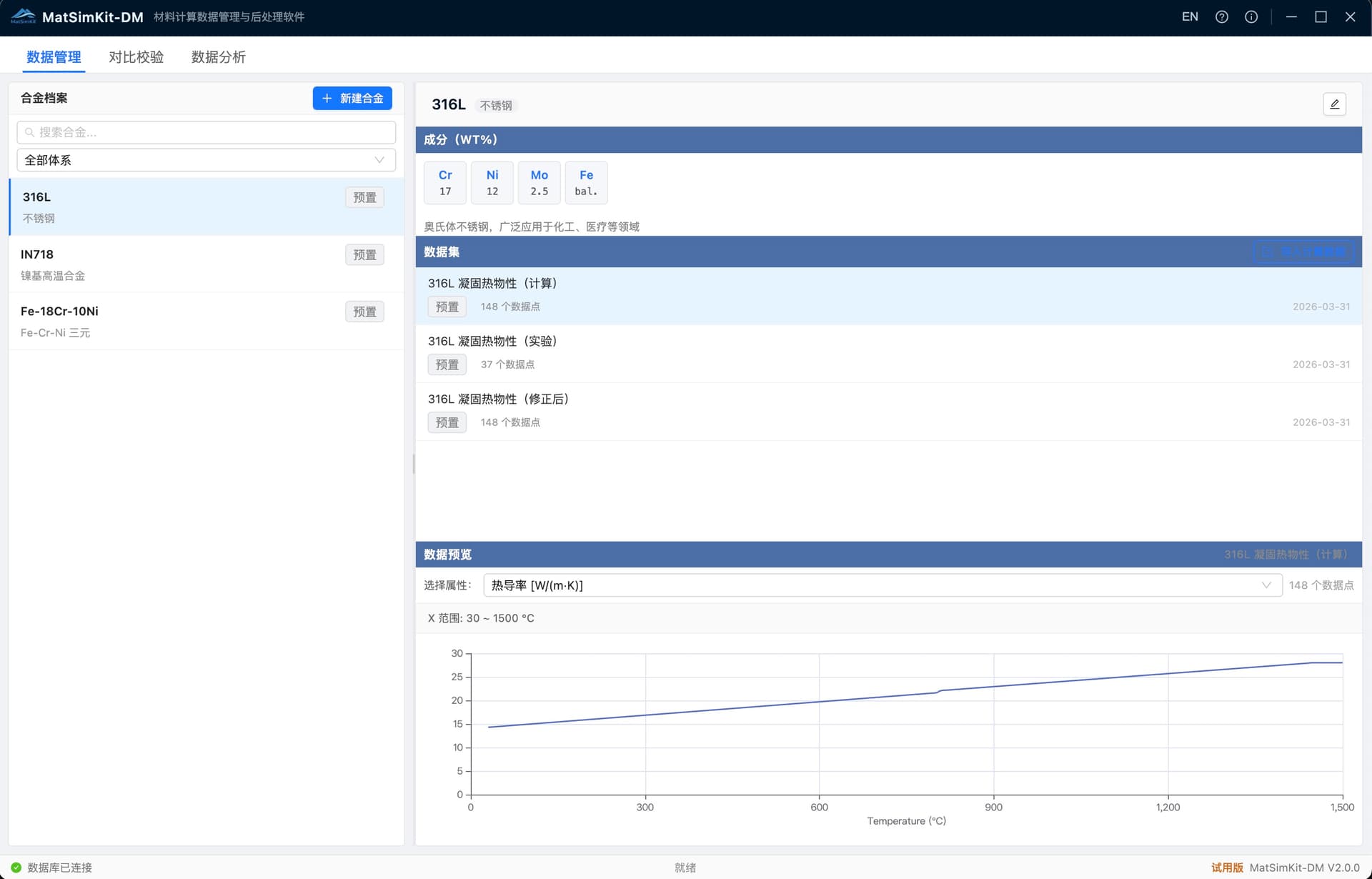
Alloy Archive Management
The software builds an enterprise-grade alloy archive library organized by grade and alloy system. Each archive stores nominal composition, remarks, and multiple attached datasets — both calculation results and experimental measurements. Archives support fast retrieval by name or alloy system, so even as historical data grows, the target alloy is always located in seconds.
The software supports importing data from multiple sources, including JMatPro® calculation results, outputs from MatSimKit-HT and MatSimKit-Flow, and experimental measurement data collected or tested by the user. All sources are unified under the same archive management framework. All historical records are centrally archived, replacing scattered folders and spreadsheets with a structured, searchable knowledge repository.
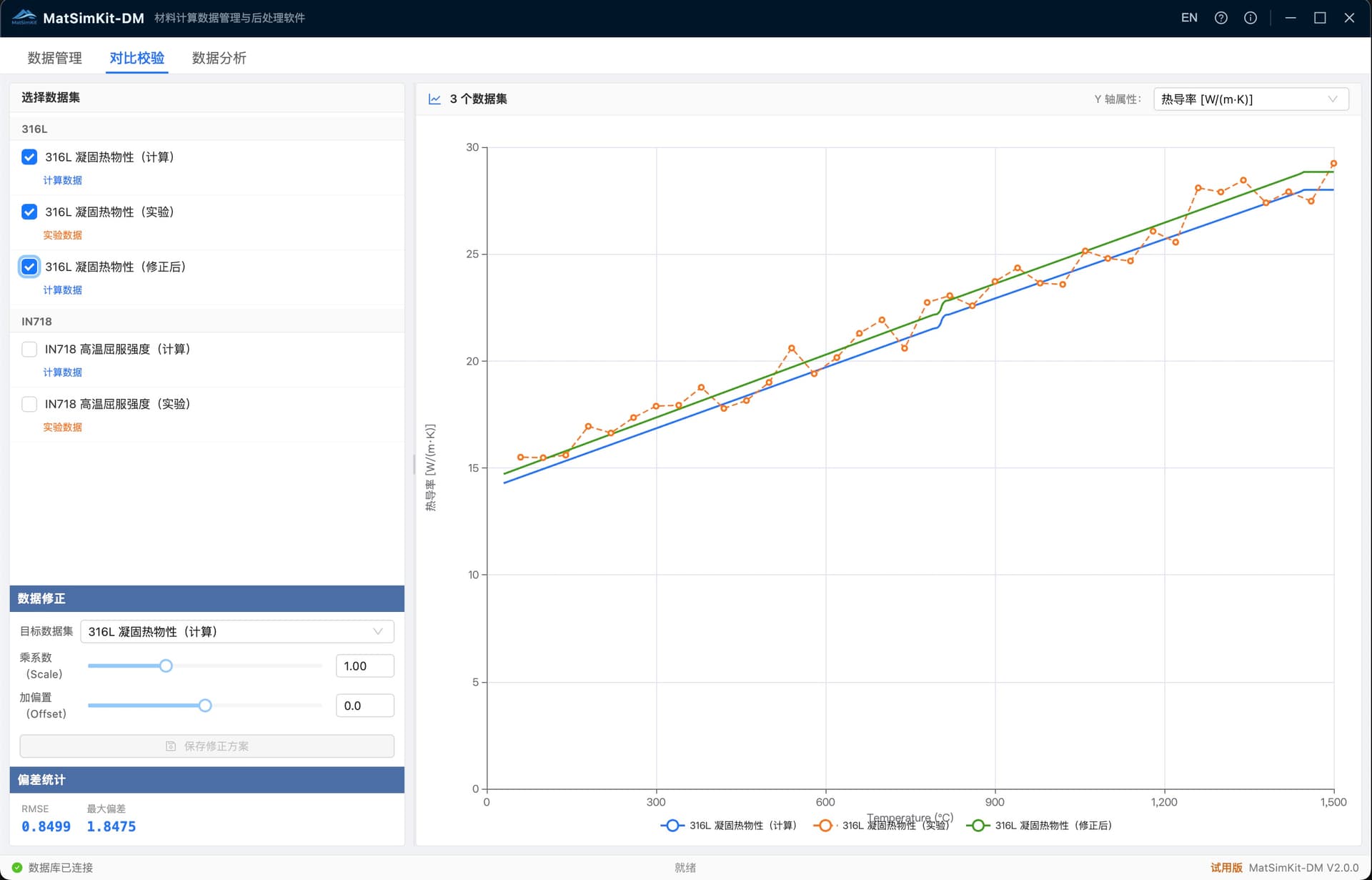
Calculation–Experiment Comparison and Validation
The software provides professional tools for overlaying calculated curves and experimental measurements on the same chart, making discrepancies immediately visible. The built-in correction function lets engineers preview adjustments in real time; RMSE and maximum deviation are computed automatically to quantify accuracy. For scenarios with special calibration requirements, custom correction models can be developed to the user's exact needs, flexibly adapting to different material systems and calculation types.
Once correction is complete, the software supports two persistence options: saving the corrected data as a new dataset for direct reuse in subsequent simulation tasks, or saving the correction parameters separately so the same calibration scheme can be quickly applied to other similar materials — building up a reusable library of validated correction experience.
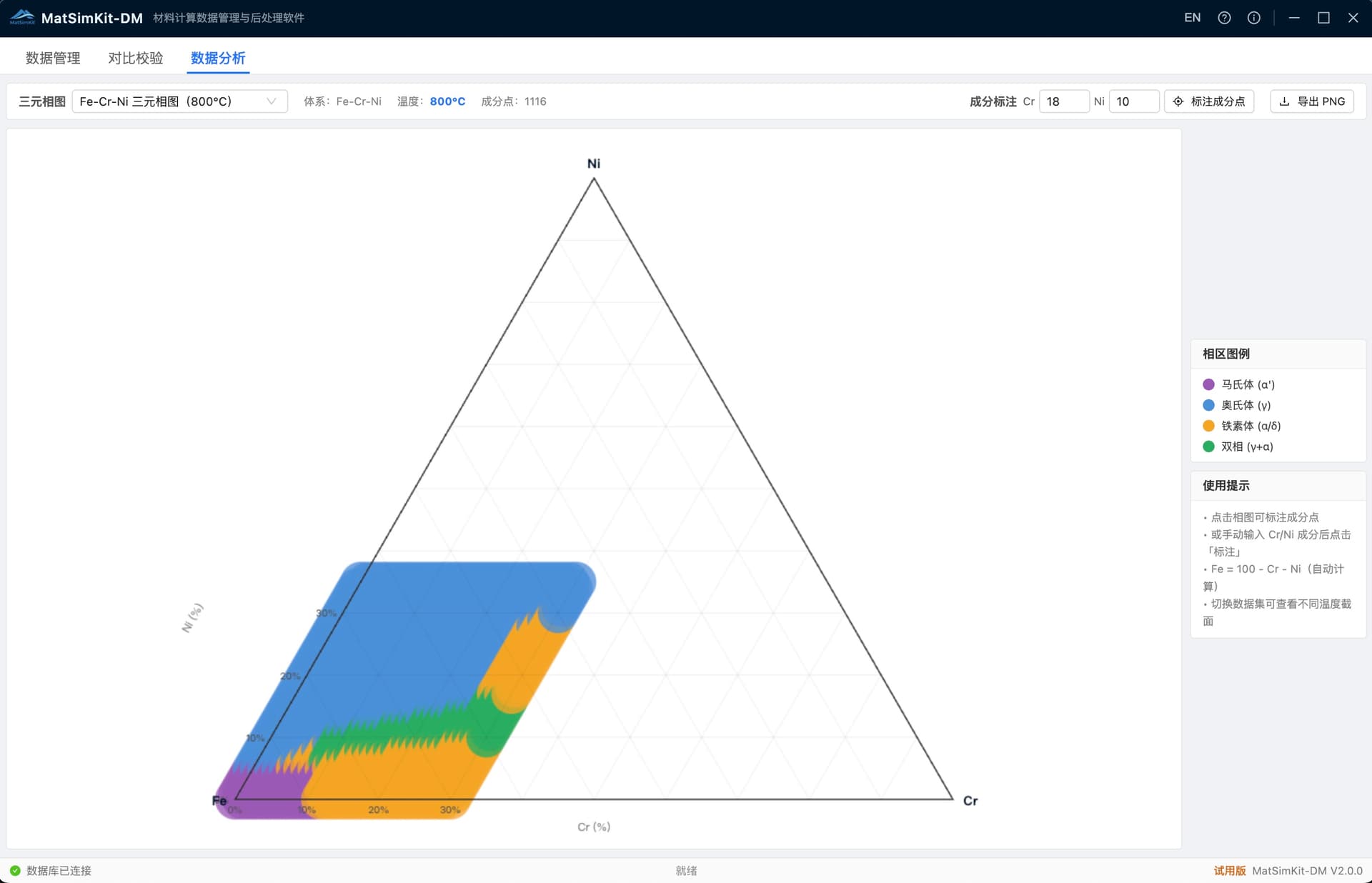
Data Visualization and Analysis
The software provides rich post-processing visualization tools, enabling material calculation results to be presented and analyzed in intuitive graphical forms. Multiple curves can be overlaid on the same chart for side-by-side comparison; two-dimensional visualizations such as phase diagrams and property distribution plots support interactive composition-point annotation, helping engineers quickly identify phase stability and property characteristics. As one example, after importing ternary system calculation data — such as Fe-Cr-Ni — users can annotate target composition points on the phase diagram and the software automatically identifies the dominant phase at each point.
All charts support zoom and pan for detailed inspection of regions of interest. Completed visualizations can be exported as high-resolution images with one click and embedded directly into technical reports or presentation slides, eliminating manual screenshots and layout work.
Product Highlights
End Data Silos, Centralize Everything
Multi-source data unified in one repository, retrievable by material grade — replacing scattered folders and spreadsheets so all historical calculations and experiments are always at hand.
Quantified Validation, More Trustworthy Simulations
Overlay calculated and experimental curves for visual comparison; real-time correction preview with automatic RMSE computation turns experience-based parameter tuning into a documented, quantifiable process.
Reusable Correction Schemes, Less Repeated Effort
Correction parameters saved separately can be applied instantly to other similar materials, building a reusable library of validated calibration experience and eliminating repeated adjustments from scratch.
Rich Visualization, Instant Pattern Recognition
Multi-curve overlay, phase diagrams, and property distribution plots transform raw numbers into clear graphics, helping engineers quickly spot material performance trends and relationships.
Application Scenarios
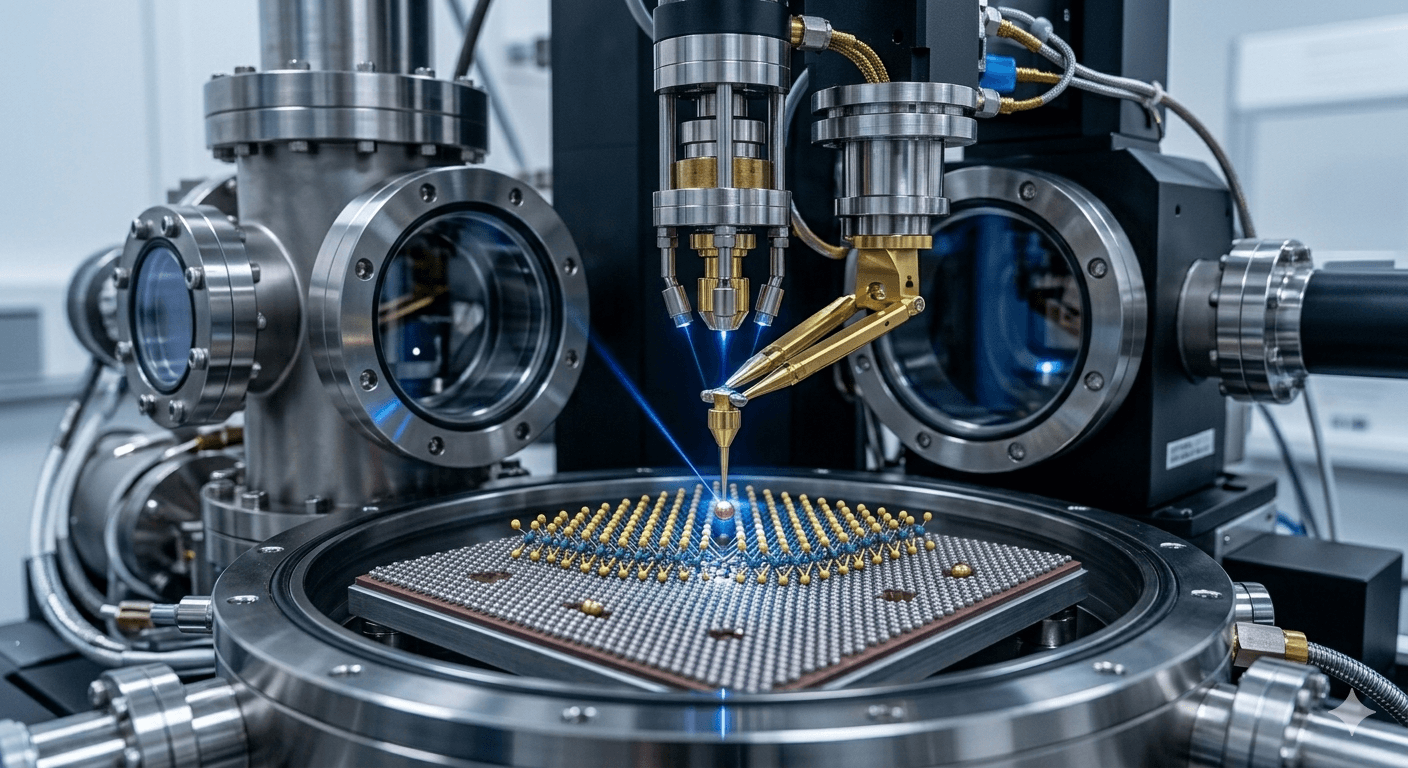
Material R&D Data Management
Manage multi-batch calculation results during new alloy development, compare with experimental validation data, and build complete R&D data archives.
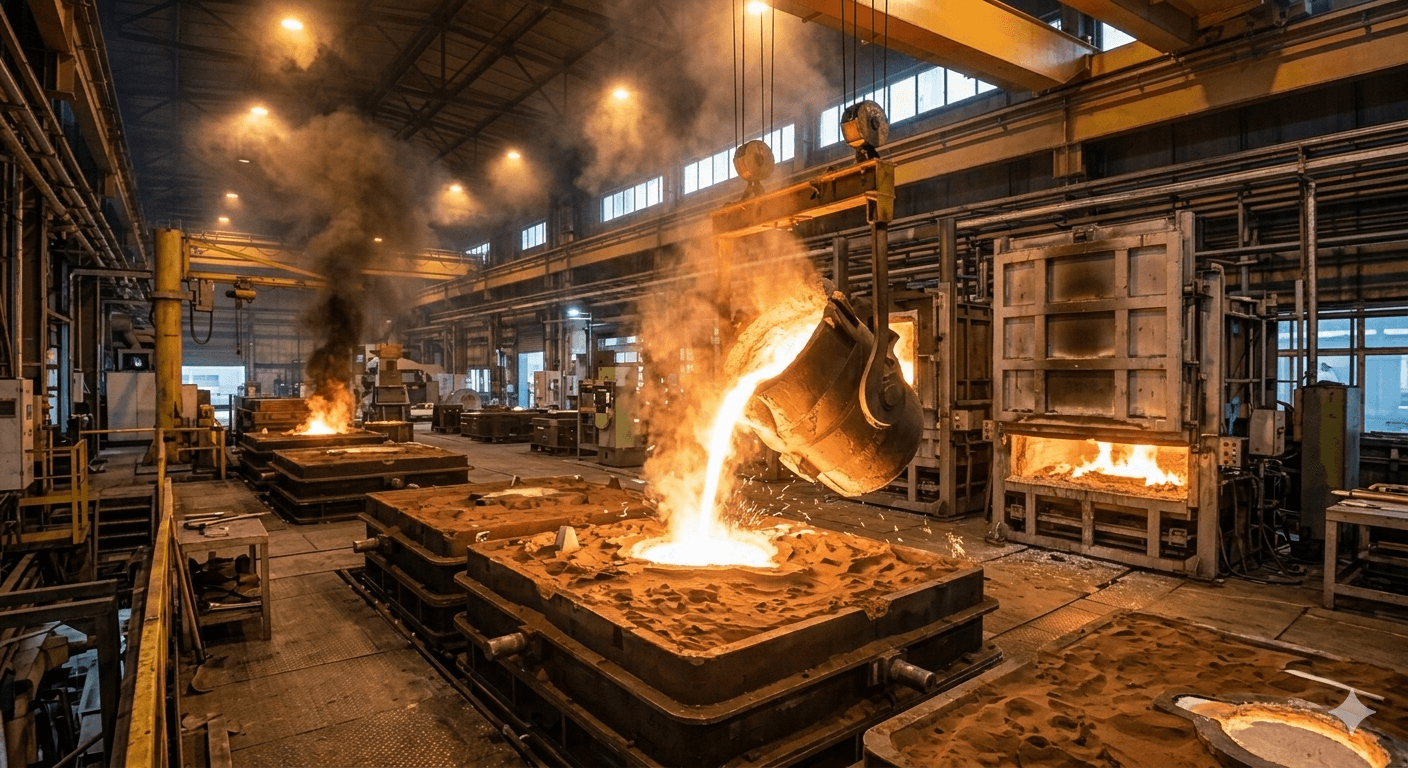
Casting Simulation Accuracy Improvement
Visually correct thermophysical parameters to reduce calculation–experiment deviation and improve the accuracy of casting simulation models.

Enterprise Material Database Construction
Accumulate and organize alloy thermophysical data; correction schemes are persistently saved, building a proprietary enterprise material knowledge base.

Scientific Research Comparison
Multi-curve overlay comparison across alloys and datasets, supporting comparative analysis of different calculation methods in research institutions.
Technical Specifications
| Operating System | Windows 10+ / macOS 12+ / Ubuntu 20.04+ |
| Version | V2.0.0 |
| Memory | 4 GB or more |
| Storage | 200 MB installation space |
| Network | No internet required, fully offline |
| Data Formats | JSON (calculation) / CSV (experimental) |
MatSimKit-DM
Transform scattered calculation data into enterprise material knowledge